Why do bats need our help?
Public LED lighting specially developed for areas where bats live is nothing new in our portfolio. However, the protection of many endangered animal species, bats included, is becoming an urgent issue. Although they provide humans with invaluable services, their populations have declined alarmingly over recent decades. Education about the essential role that bats (among others) play in maintaining healthy ecosystems has therefore never been more important.
One of the international agreements ensuring the protection of migratory bat species is the Agreement on the Conservation of Bats in Europe (EUROBATS) of 1991, in force since 1994. The agreement covers all European bat species and was adopted because their conservation status was not very favourable and in many European countries bats are among the most seriously endangered species. The Slovak Republic signed the international Agreement on the Conservation of Bats in Europe on 8 August 1998. According to experts, as many as 28 bat species currently live in Slovakia and all of them are protected by law.
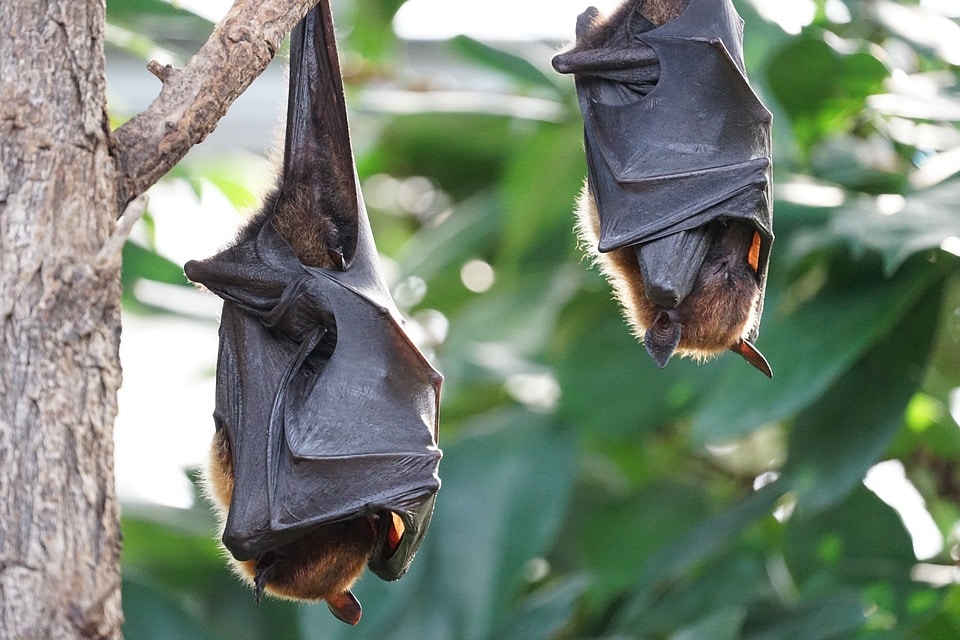 Although bats have almost no natural enemies, in recent decades they have faced many threats, mostly related to human activity.
Bats’ natural habitats are shrinking, forcing them into contact with people. Bats can, however, get used to humans if they need to. By raising awareness of their lives, we can overcome myths, fear and the imaginary barrier between people and bats. This mission matters also because bats often use human buildings to live in. And yet it is humans who contribute most to the threats to their lives.
The destruction of their natural habitat and the disturbance of their roosts (through pollution of the countryside and rivers, and the felling of forests and riverside vegetation) is seriously threatening bats and causing their numbers to fall. As a result, bats are losing their shelters and do not have enough food.
In addition, the increasingly aggressive use of pesticides in agriculture is leading to a sharp decline in bats’ main food source. Most bats feed on insects, making a significant contribution to keeping insect numbers in check in nature. A single Daubenton’s bat can eat up to three thousand mosquitoes in one night. Bats live in large groups and have developed social bonds and behaviour. Colonies, which can number hundreds of thousands of individuals, can consume several hundred tonnes of insects in a single night.
 Bats form a separate order within the class of mammals, with the scientific name Chiroptera (chiro – hand, ptera – wing). They are the only flying mammals, which is probably why so many myths and superstitions surround them.
How lighting affects foraging
Bats have long made use of various man-made structures and buildings. Many bats in Slovakia are currently tied to prefabricated panel blocks of flats. Bats are also commonly found in the lofts of churches and other old buildings, which are sought-after places to raise young because they are quiet and dark. An important factor is bats’ low reproductive rate – most females give birth to only one pup a year.
Because of lighting near their roosts, some slower-flying bat species emerge later, which shortens their foraging time. Bats thus deplete their fat reserves – a difference in body weight has been observed between individuals living in artificially lit and unlit colonies – the young are smaller and, with lower fat reserves, often fail to survive hibernation. Faster bat species, on the other hand, are attracted by the higher concentration of insects near luminaires, so they gather artificially around luminaires in parks, gardens or housing estates. That is why we need to look for solutions that allow bats to exist without causing problems for people.
 We can help bats by putting up special boxes in gardens, parks or woods. Unlike bird boxes, they have the entrance opening at the bottom.
Light and bats – how does it work?
Animals that rely on the moon or natural night light for orientation are disturbed by artificial light sources. The disappearance of natural night-time darkness has a fundamental effect on many animal species. Bats are particularly sensitive to disruptive light near their roosts, on their flight routes and in the areas where they hunt for food. Street lighting in particular can cause painful glare for these nocturnal creatures.
Compared with other, diurnal mammals, bats’ eyes are perfectly adapted to dark environments. This is mainly thanks to the high sensitivity of the retina and the large proportion of rods in the eye. As a result, a bat can see four to five times better than a human in the dark. A bat’s retina is sensitive even at very low light intensities. At high light intensity (daylight), detection is reduced by overstimulation of the rods in the retina. The composition of the retina varies between bat species, so the effect of artificial light may differ from species to species. Bats can also see ultraviolet light, but this light can distort the image. Public luminaires that emit UV radiation can cause problems for bat species whose eyes lack a UV-blocking filter, which can result in retinal damage.
Research by Rijkswaterstaat (part of the Dutch Ministry of Infrastructure and Water Management) from 2012 showed that bats’ eyes are particularly sensitive to ultraviolet radiation and to the blue part of the colour spectrum, and much less sensitive to orange and red light. Light sensitivity varies across species, but in general the sensitivity to red visible light is lower than the sensitivity to white light. On this basis, the Dutch manufacturer Innolumis developed an amber-coloured light without UV radiation. Thanks to its orange colour, it is practically indistinguishable from a conventional sodium lamp. The luminaire deliberately accepts lower efficiency and relies on the lowest possible colour temperature, which is far less disturbing to animals at night.
Luminaires developed for bats were first used at the end of 2011 to light a wildlife overpass on a motorway in the Netherlands. Continuous lighting along bats’ flight paths (along roads or rivers) creates an insurmountable barrier for some species, leaving colonies isolated. Artificial lighting acting as a barrier thus forces bats to change their usual flight routes.

Since 1997, the last weekend of August has been dedicated to International Bat Night, which takes place in more than 50 countries worldwide, including Slovakia.
Bat-friendly public lighting
The spectrum of natural light gives bats valuable information about their location, the time of day and year, and their surroundings as a whole. Conversely, artificial light at night has a negative effect on bats’ everyday activities, such as emerging from the roost, commuting to hunting grounds and hunting itself. It has been shown that the vision of some nocturnal predators was impaired by artificial lighting and their hunting success fell considerably.
When choosing suitable public lighting, several factors are taken into account, such as energy consumption, design or residents’ safety. A lit environment gives people a sense of security, but it can cause considerable problems for nocturnal animals. In the past, public lighting operated only on moonless nights or only until midnight. During the 20th century, the development of electric lighting, transport infrastructure and economic activity, together with the rapid growth of human settlements, led to permanent lighting from dusk to dawn, 365 days a year in developed cities.
Today, LED luminaires are replacing traditional lighting, mainly thanks to their greater energy efficiency, design flexibility, ability to change light colour and long service life. That is why our portfolio includes the Nicole Bat LED street luminaire, specially designed for areas where bats live. The luminaire has a long service life and requires minimal maintenance – making it a sustainable solution that can protect thousands of bats in Slovakia from unwanted glare.
For more information on the specifications of the Nicole Bat luminaire, do not hesitate to contact us.
Sources:
- https://www.enviroportal.sk/dokumenty/medzinarodne-dohovory/dohovor/176?
- http://www.sopsr.sk/web/?cl=20548
- https://tech.sme.sk/c/20062775/ako-sa-netopiere-dokazu-zblizit-s-clovekom.html#ixzz610sPlyxm
- https://www.dw.com/en/international-bat-night-helping-endangered-bats-matter/a-18679165
- https://www.bbc.com/news/science-environment-28402710
- https://www.sciencedaily.com/releases/2019/03/190327080702.htm
- https://www.rijkswaterstaat.nl/wegen/wegbeheer/natuur-en-milieu/verbinden-natuurgebieden/vleermuisvriendelijke-verlichting/#134793
- https://www.innolumis.com
- https://pixabay.com/sk/