Does blue light disrupt sleep, damage our eyes and lower our quality of life? Is it a real problem, or just an overblown scare? In this article we explain what blue light is, how it is produced, and where and when we are most often exposed to it. We look at whether it is harmful (and if so, in which cases) and whether it also has a positive effect on our health. You will also find out how to get “just the right amount” of blue light over the course of the day.
What is blue light?
Blue light is the part of the visible colour spectrum with a wavelength of 380–500 nanometres. The natural source of blue light is the sun. In this form, blue light is important for our sleep–wake cycle and regulates our biological rhythm.
However, blue light is also emitted by LED luminaires and the screens of electronic devices (smartphones, tablets, laptops…). Although these technologies help us in many ways, they increase our exposure to blue light. This article focuses on exactly that area – blue light from artificial sources.
Image source: www.unsplash.com
When is blue light a problem?
Under certain circumstances, artificial blue light can be harmful. Many of us take in excessive doses of blue light from artificial sources during the day, or are exposed to blue light at the wrong time. You can probably already guess where the problem lies. Blue light in itself is not “bad”; what matters is when, in what form and in what amount you receive it.
High doses of unnatural blue light during the day
If you used cool light all day at home or at work, your eyes would receive excessively high doses of blue light. In 2019 the French health agency ANSES warned that excessive amounts of unnatural blue light cause headaches, eye strain and general fatigue.
Blue light in the evening
If you expose yourself in the evening to bright unnatural light with a high proportion of blue, your brain thinks it is still daytime and sees no need to get ready for sleep.
Did you know…?
Sleep scientists say that the difference between the amount of light we receive during the day and in the evening should be as large as possible. In practice, this means that during the day you should get plenty of daylight (ideally natural, or suitable artificial light if you sit in an office, for example), while in the evening you should use less light and warmer colours of light. In the past this difference was much greater – people worked in the fields and used no light in the evening, or only firelight. Nowadays, however, the difference is far less pronounced, which can cause various problems.
Is blue light harmful?
As we can see, excessive exposure to unnatural blue light during the day, or exposure to blue light in the evening, has an adverse effect on our bodies. So what can blue light cause?
Tired eyes and headaches
Working under blue light every day puts excessive strain on the eyes. Long-term exposure to blue light, or short-term exposure to high-intensity blue light, can cause eye fatigue, dry, gritty or burning eyes, watery eyes, visual disturbances or headaches.
Image source: www.pexels.com
Poorer sleep quality and difficulty falling asleep
Under normal circumstances, the body starts producing melatonin (the sleep hormone and also a powerful antioxidant) exactly when it is needed – roughly an hour after sunset. As melatonin levels rise, so do our tiredness and drowsiness, which prompts us to get ready to rest. Our internal body clock is precisely set.
One of the biggest problems with artificial blue light is its negative effect on sleep quality. If you are exposed to blue light before bed, your body does not produce as much melatonin as it needs for restful, good-quality sleep. Your body then assumes it is still daytime and that there is no need to wind down and prepare for sleep.
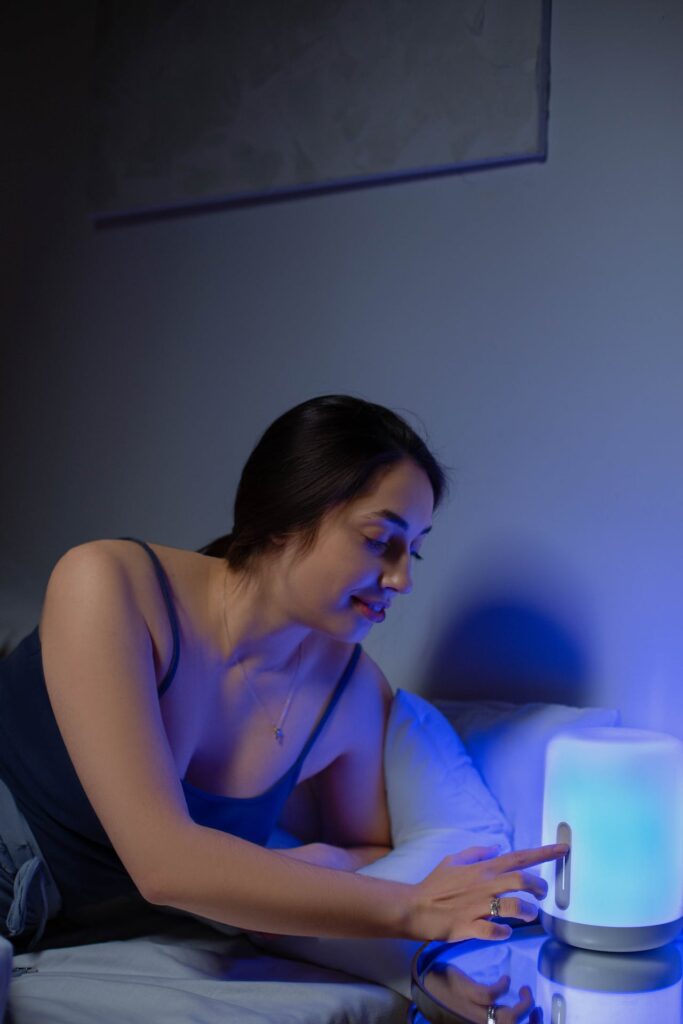
Image source: www.pexels.com
If you suppress melatonin production in the evening, you can end up having trouble falling asleep, disrupt your natural sleep routine and reduce the quality of your sleep. In practice, this means you may wake up tired, irritable and unrested – even though you were not in bed for a short time at all and “clocked up” your usual 8 hours or even more.
Blue light can mean that your sleep is of poorer quality, you find it harder to fall asleep and your deep sleep phases are shorter. Frequent poor-quality or insufficient sleep has a negative long-term effect on overall health and vitality.
Did you know…?
For good, restorative sleep your body needs the deepest possible darkness. Darkness allows your body to release enough melatonin so that you can rest fully. If light disturbs you at night (a blinking indicator on an appliance, the standby light on the TV, street lighting…), your body will not rest as well as it should. So if you want to wake up truly refreshed, black out your bedroom as much as possible and remove all sources of disturbance.
Disrupted biorhythm
The circadian rhythm controls and optimises our internal processes, such as hormone production, digestion, immunity and many others. Our biorhythm is influenced by many factors, and lighting is one of them.
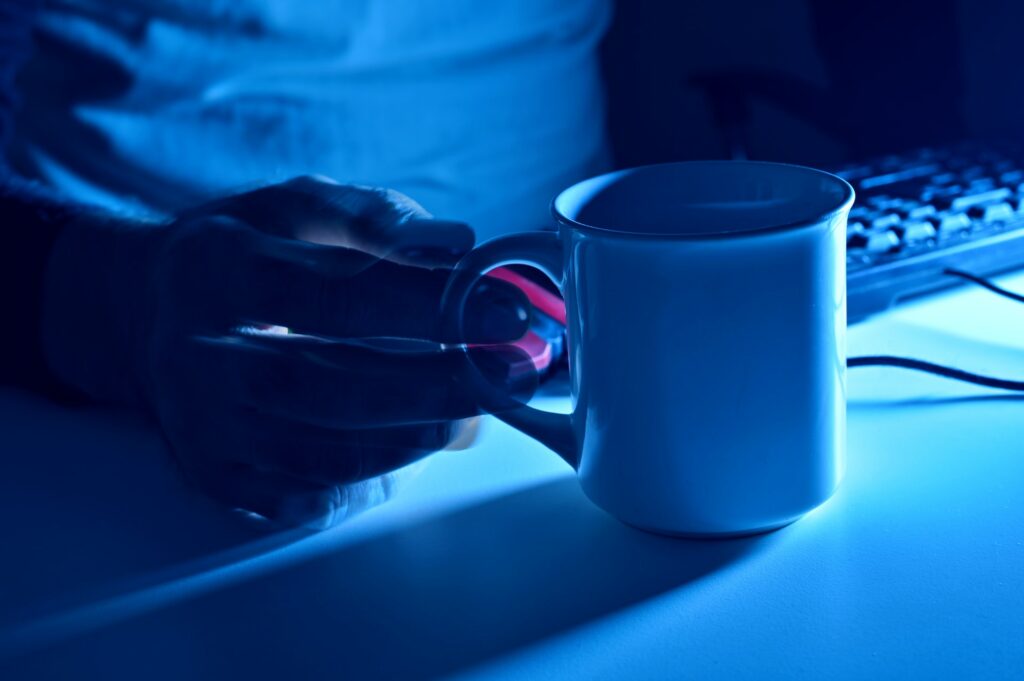
Image source: www.unsplash.com
Lower performance, general exhaustion and low mood
Those of you who have spent a whole day in a space with lighting that is too cool have probably noticed that this kind of lighting really does “wind you up”. In the morning this may do no harm, but all-day exposure to cool light leads to general fatigue, irritability and, logically, to lower productivity and impaired cognitive function (slow thinking, inability to concentrate, poorer memory).
Insomnia, depression, weakened immunity, diabetes, obesity
As the report by the French agency ANSES states, a lack of melatonin can have a negative effect on a whole range of other areas. It can contribute to sleep disorders, the development of depression or weakened immunity.
Poor-quality or insufficient sleep can reduce your performance as well as your overall vitality and mental wellbeing. According to studies, reduced melatonin production is closely linked to higher production of the stress hormone cortisol, a tendency to gain weight and the development of cardiovascular disease or diabetes.
Is blue light beneficial?
In certain cases, yes. If we go back to sunlight, which naturally contains a considerable amount of blue light, we can see that it has many positive effects on our health – it promotes alertness, improves mood, regulates our biorhythm and benefits the immune system and digestion. Blue light from artificial lighting can also bring us certain benefits.
Supporting hormonal balance and metabolism
Blue light in the right doses and at the right time helps regulate hormone production in the body and maintain physiological wellbeing. It also has a positive effect on metabolism – again, of course, “in the right doses and at the right time”.
Improved cognitive function and mood
Exposure to blue light at the right time and in the right amount can improve alertness and support concentration and mental wellbeing.
Help with winter depression and insomnia
Light therapy is used successfully to relieve insomnia and depression in the winter months.
How to ensure visual comfort throughout the day
Blue light is not simply “purely bad” or “purely good”. It should not be labelled “bad”: its effect on our bodies can be positive – you just need to know when and how much to expose yourself to it. So what is the right amount, and how can you ensure maximum visual comfort during the day?
1. Take inspiration from nature
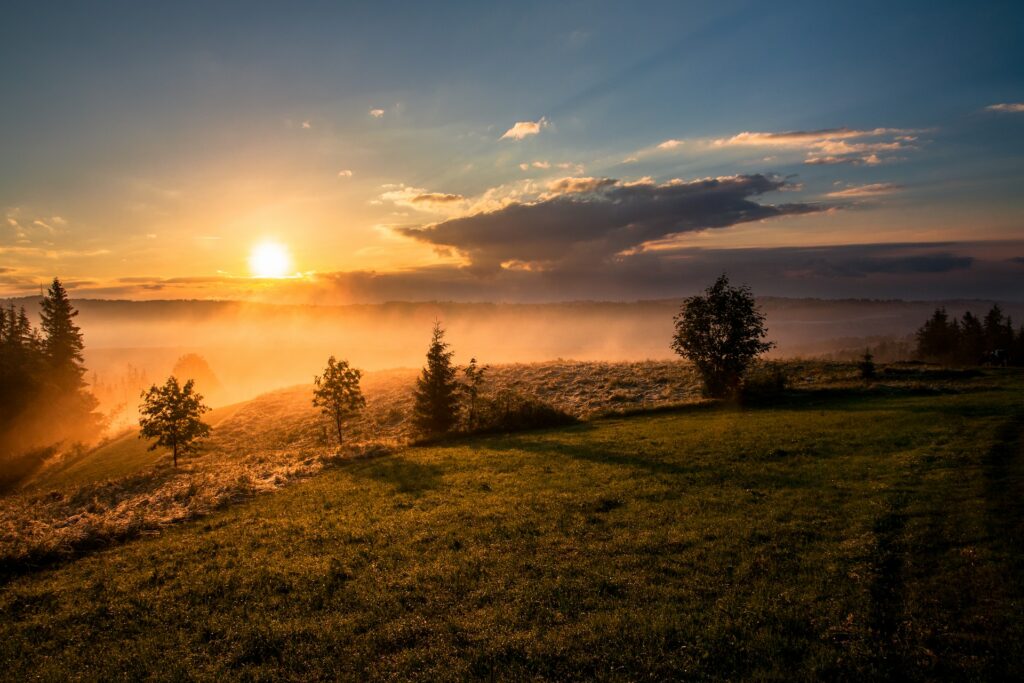
Image source: www.unsplash.com
Take inspiration from nature and mimic the natural cycle of day and night. In the morning, when the sun rises and you wake up, blue light is useful. It helps you get going. During the day it is good to use light that resembles natural light as closely as possible. In the evening, treat your eyes to warm, lower-intensity light reminiscent of a flame – that is, light in yellow and orange tones.
2. Plenty of daylight
If you work in an office and your desk is by a window, you are lucky. Daylight from the sun is the most natural and ideal source of light. If you do not have this option, a properly designed lighting system can replace it very well.
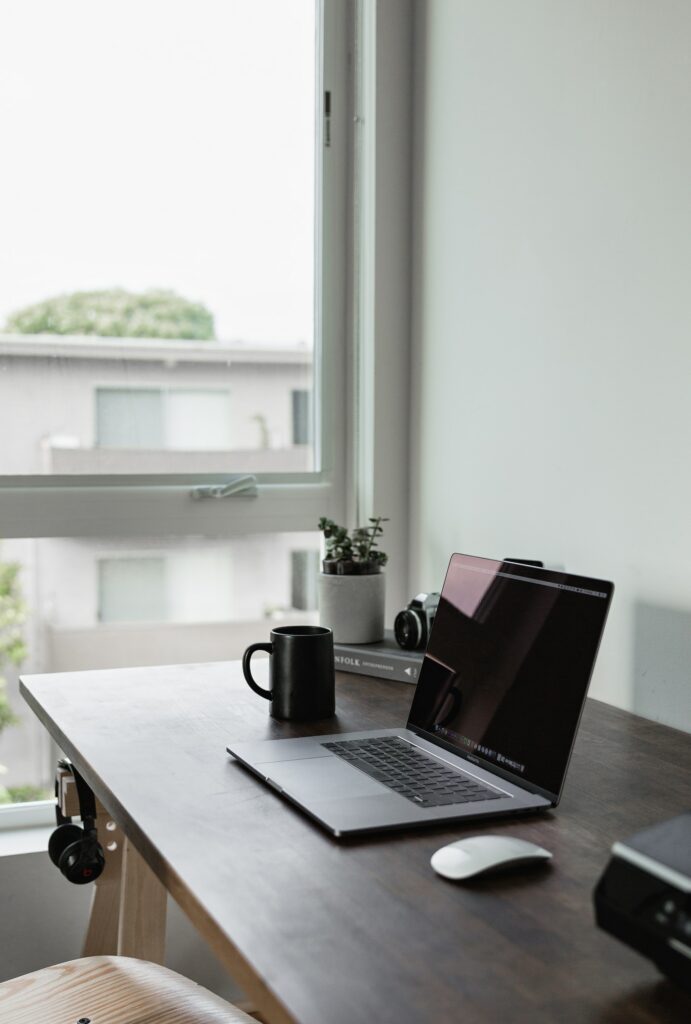
Image source: www.unsplash.com
3. The right lighting system
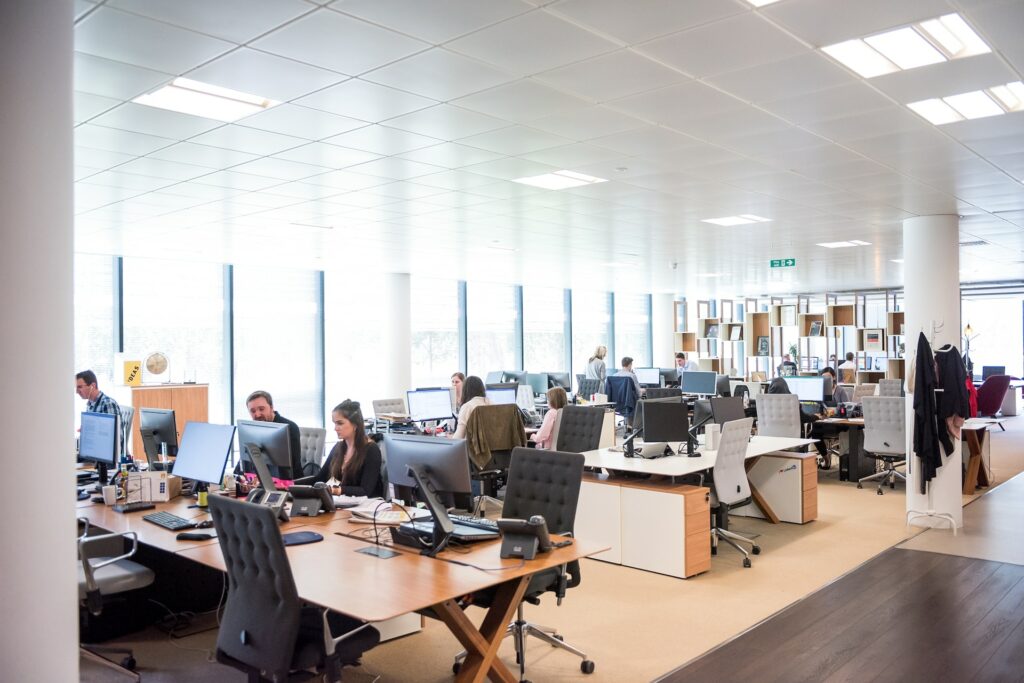
Modern LED luminaires offer countless options – you can choose and change the colour temperature, dim the luminaires or programme them to suit your needs. What matters, however, is choosing the right luminaires with suitable parameters, positioning them well and setting them up correctly – only then can the whole system work as it should. A properly and professionally designed lighting system can bring you many benefits in the long run. It ensures visual comfort for the people working in the space and supports their mental and physical wellbeing.
Did you know…?
Lighting influences mood, the perception of space and purchasing decisions, often without us as customers even realising it. There is also lighting on the market that can support the natural human circadian rhythm (known as biodynamic lighting) – the colour and intensity of the light change over the course of the day. In the morning the light is cooler to boost energy and performance; towards evening it is dimmer and warm to encourage restful sleep. Throughout the day it provides dynamic changes in illuminance and colour temperature. Travellers, athletes and pilots, on the other hand, may find portable dynamic lighting useful – it was originally developed for astronauts on the International Space Station to support their circadian rhythms.
4. Take a break from the screen
If you work at a computer, take breaks. Your eyes, mind and body will certainly appreciate it. Go for a 5-minute walk, have a coffee, do some exercise, walk up and down the stairs, step out onto the terrace, look into the distance. Even a few minutes of this can do a lot. So take breaks like these as often as possible during the day, ideally once an hour.
5. Evening calm
As we have shown above, chronic lack of sleep can lay the foundation for the onset and development of many diseases. So keep a healthy sleep routine and keep blue light to a minimum in the evening. How?
✓ In the evening, use only warm, lower-intensity light
Evening lighting should be in warm tones, reminiscent of the colour of fire. Suitable evening lighting contributes to a healthy sleep cycle.
Do not forget, however, that light intensity also plays an important role. If you use warm but overly intense light in the evening, your eyes will still receive a large amount of blue light. Warm light also contains a blue component, and the higher the light intensity, the greater the amount of blue light. So remember: in the evening, switch your lighting to warm and dim it.
✓ Turn on night mode on your screen
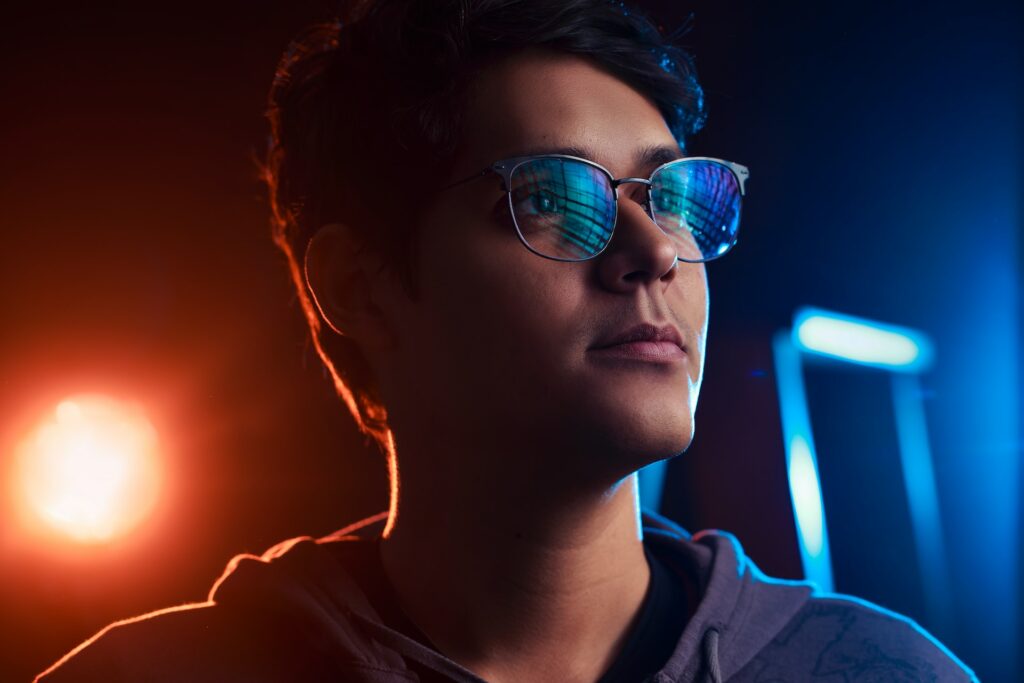
Ideally, you should not look at any screen (mobile phone, tablet, laptop…) for 2 hours before bed. If that is not possible, at least try to reduce the amount of blue light you take in as much as you can. Turn on night mode – in this evening setting your screen will emit less blue light, and the colours will change from cool to warm, more yellow tones.
- How to turn on night light in Windows: Settings > System > Display > Brightness & colour > Night light. You can adjust the schedule and strength of night light to suit your needs.
- How to turn on night mode in macOS: System Settings > Displays > Night Shift. Here you can create a custom schedule or an automatic schedule based on sunset.
- How to turn on night mode on an Android smartphone: Swipe down the top bar and find the night mode feature. You can set your own schedule in the display settings.
- How to turn on night mode on an iOS smartphone: Swipe up from the bottom of the screen to open the iPhone Control Centre. Tap the brightness icon and find the Night Shift feature. You can adjust the night mode schedule in the display settings.
There are also various apps that can reduce the amount of blue light emitted. They adjust the colour temperature of the screen so that the light is less cool and intensely white.
Did you know…?
Brightness and blue light are not the same thing. If you lower the brightness of your screen, you only reduce the intensity of the light it emits. This may give your eyes some relief, but your screen may still be emitting a lot of blue light. Instead of lowering the brightness, always turn on night mode.
✓ Use glasses or lenses that block blue light
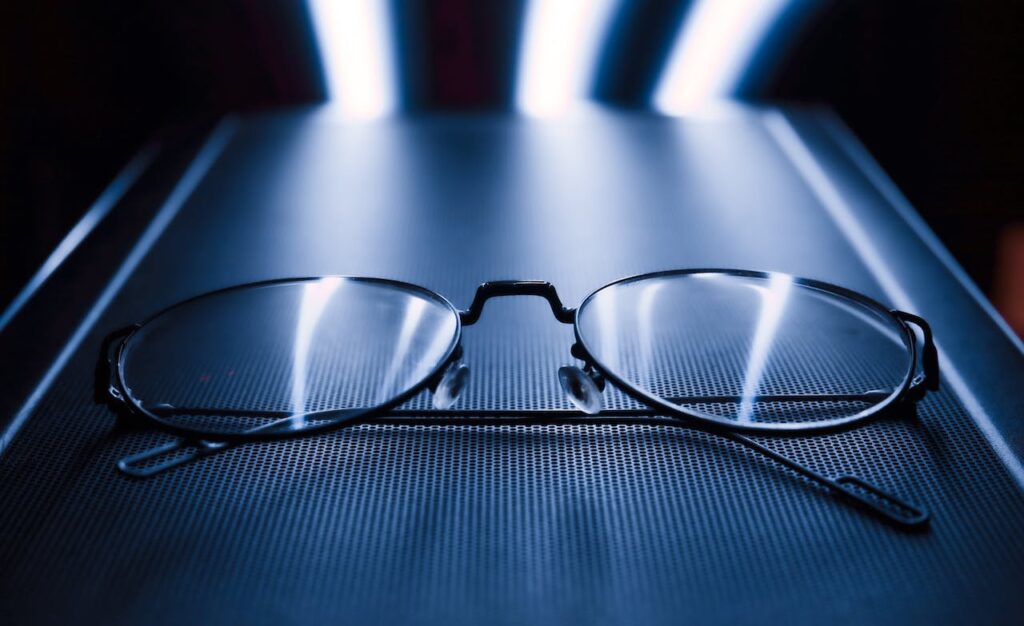
Blue light glasses work as a blue light filter. They can help you fall asleep more easily and sleep better. They also protect your eyesight – you can avoid tired, dry, burning or gritty eyes. When choosing glasses, however, bear in mind that models can differ considerably in how much blue light they filter. The degree of blue light blocking can range from 20% to 80%.
Keep blue light under control
As we can see, blue light is neither purely “good” nor purely “bad”. It is somewhere in between. Under certain circumstances it can benefit us, especially in the winter months or in the morning. However, using cool light all day or excessive exposure to it in the evening can upset the way we function – our sleep cycle, hormone production and metabolism. By using modern technologies such as LED lighting wisely, we can strike a balance between their benefits and protecting our health.
Let us expose ourselves to blue light at the right time and in the optimum amount. Let us listen to our internal body clock – it can support our overall balance. Let us make sure our lighting system is properly designed and supports both our physical health and our mental wellbeing. And last but not least, let us not forget to get natural blue light from the sun, which is unique and indispensable for our bodies.
Sources:
- https://www.anses.fr/en/content/leds-blue-light
- https://www.anses.fr/en/system/files/PRES2019DPA01EN.pdf
- https://www.led-professional.com/resources-1/articles/circadian-friendly-light-emitters-from-cct-tuning-to-blue-free-technology?utm_source=LED+professional+-+FREE+Information+Service&utm_campaign=7ba765ada7-LED+professional+Newsletter+%28LpN%29-Feb15%2C+2018_COPY&utm_medium=email&utm_term=0_ff8d2246a5-7ba765ada7-%5BLIST_EMAIL_ID%5D&ct=t%28LED+professional+Newsletter+%28LpN%29-Feb15%2C+2018_COPY%29
- Behar-Cohen, F., Martinsons, C., Viénot, F., Zissis, G., Barlier-Salsi, A., Cesarini, J. P., Enouf, O., Garcia, M., Picaud, S., & Attia, D. (2011). Light-emitting diodes (LED) for domestic lighting: any risks for the eye?. Progress in retinal and eye research, 30(4), 239–257. https://doi.org/10.1016/j.preteyeres.2011.04.002
- Tähkämö, L., Partonen, T., & Pesonen, A. K. (2019). Systematic review of light exposure impact on human circadian rhythm. Chronobiology international, 36(2), 151–170. https://doi.org/10.1080/07420528.2018.1527773
- Fonken, L. K., & Nelson, R. J. (2014). The effects of light at night on circadian clocks and metabolism. Endocrine reviews, 35(4), 648–670. https://doi.org/10.1210/er.2013-1051
- Wood, B., Rea, M. S., Plitnick, B., & Figueiro, M. G. (2013). Light level and duration of exposure determine the impact of self-luminous tablets on melatonin suppression. Applied ergonomics, 44(2), 237–240. https://doi.org/10.1016/j.apergo.2012.07.008
- Lunn, R. M., Blask, D. E., Coogan, A. N., Figueiro, M. G., Gorman, M. R., Hall, J. E., Hansen, J., Nelson, R. J., Panda, S., Smolensky, M. H., Stevens, R. G., Turek, F. W., Vermeulen, R., Carreón, T., Caruso, C. C., Lawson, C. C., Thayer, K. A., Twery, M. J., Ewens, A. D., Garner, S. C., … Boyd, W. A. (2017). Health consequences of electric lighting practices in the modern world: A report on the National Toxicology Program’s workshop on shift work at night, artificial light at night, and circadian disruption. The Science of the total environment, 607-608, 1073–1084. https://doi.org/10.1016/j.scitotenv.2017.07.056
- Skene, D. J., & Arendt, J. (2006). Human circadian rhythms: physiological and therapeutic relevance of light and melatonin. Annals of clinical biochemistry, 43(Pt 5), 344–353. https://doi.org/10.1258/000456306778520142
- Burkhart, K., & Phelps, J. R. (2009). Amber lenses to block blue light and improve sleep: a randomized trial. Chronobiology international, 26(8), 1602–1612. https://doi.org/10.3109/07420520903523719
- Gooley, J. J., Chamberlain, K., Smith, K. A., Khalsa, S. B., Rajaratnam, S. M., Van Reen, E., Zeitzer, J. M., Czeisler, C. A., & Lockley, S. W. (2011). Exposure to room light before bedtime suppresses melatonin onset and shortens melatonin duration in humans. The Journal of clinical endocrinology and metabolism, 96(3), E463–E472. https://doi.org/10.1210/jc.2010-2098
- Cajochen, C., Frey, S., Anders, D., Späti, J., Bues, M., Pross, A., Mager, R., Wirz-Justice, A., & Stefani, O. (2011). Evening exposure to a light-emitting diodes (LED)-backlit computer screen affects circadian physiology and cognitive performance. Journal of applied physiology (Bethesda, Md. : 1985), 110(5), 1432–1438. https://doi.org/10.1152/japplphysiol.00165.2011
- Ostrin, L. A., Abbott, K. S., & Queener, H. M. (2017). Attenuation of short wavelengths alters sleep and the ipRGC pupil response. Ophthalmic & physiological optics : the journal of the British College of Ophthalmic Opticians (Optometrists), 37(4), 440–450. https://doi.org/10.1111/opo.12385
- Guan, Q., Wang, Z., Cao, J., Dong, Y., & Chen, Y. (2021). Mechanisms of Melatonin in Obesity: A Review. International journal of molecular sciences, 23(1), 218. https://doi.org/10.3390/ijms23010218
- Reiter, R. J., Tan, D. X., Korkmaz, A., & Ma, S. (2012). Obesity and metabolic syndrome: association with chronodisruption, sleep deprivation, and melatonin suppression. Annals of medicine, 44(6), 564–577. https://doi.org/10.3109/07853890.2011.586365
- Boutin, J. A., Kennaway, D. J., & Jockers, R. (2023). Melatonin: Facts, Extrapolations and Clinical Trials. Biomolecules, 13(6), 943. https://doi.org/10.3390/biom13060943
- Ong, J. L., Massar, S. A. A., Lau, T., Ng, B. K. L., Chan, L. F., Koek, D., Cheong, K., & Chee, M. W. L. (2023). A randomized-controlled trial of a digital, small incentive-based intervention for working adults with short sleep. Sleep, 46(5), zsac315. https://doi.org/10.1093/sleep/zsac315
- Ratcliff, R., & Van Dongen, H. P. A. (2018). The effects of sleep deprivation on item and associative recognition memory. Journal of experimental psychology. Learning, memory, and cognition, 44(2), 193–208. https://doi.org/10.1037/xlm0000452
- Xin, Q., Yuan, R. K., Zitting, K. M., Wang, W., Purcell, S. M., Vujovic, N., Ronda, J. M., Quan, S. F., Williams, J. S., Buxton, O. M., Duffy, J. F., & Czeisler, C. A. (2022). Impact of chronic sleep restriction on sleep continuity, sleep structure, and neurobehavioral performance. Sleep, 45(7), zsac046. https://doi.org/10.1093/sleep/zsac046
- Nicolazzo, J., Xu, K., Lavale, A., Buckley, R., Yassi, N., Hamilton, G. S., Maruff, P., Baril, A. A., Lim, Y. Y., & Pase, M. P. (2021). Sleep symptomatology is associated with greater subjective cognitive concerns: findings from the community-based Healthy Brain Project. Sleep, 44(9), zsab097. https://doi.org/10.1093/sleep/zsab097