What is electrosmog?
- “electro” (in the sense of relating to electrical equipment)
- “smog” (in the sense of air pollution caused by human activity)
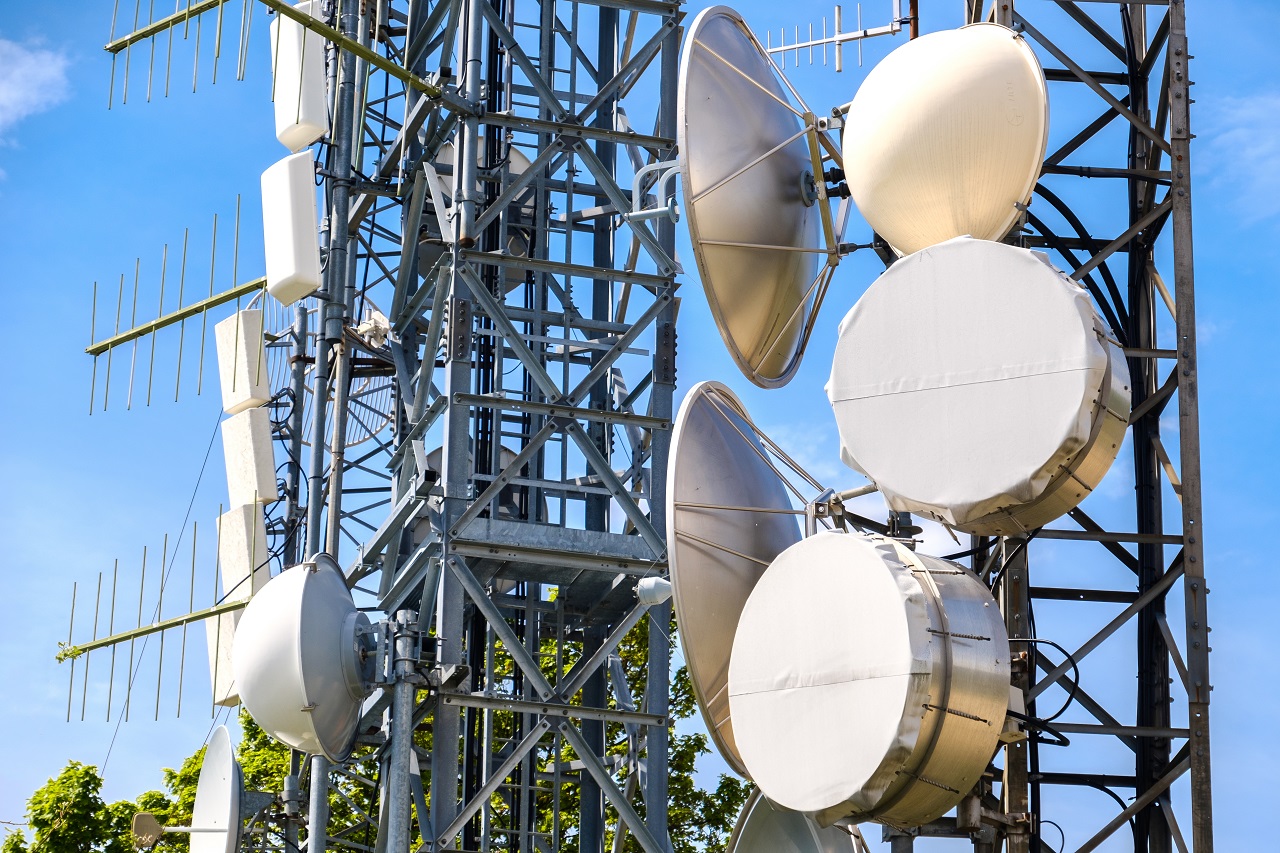
Equivalent terms for electrosmog could be electromagnetic pollution or electrical pollution. Sources of electrosmog include various transmitters, electrical appliances, motors and electricity transmission networks. Its level is measured with special meters. We have one too, so a later part of this blog will also be devoted to measurements.
Types of electrosmog
A change in an electric or magnetic field (or both at once) over time is called an electromagnetic wave. The energy of the wave is carried by particles (photons) – yes, just as with light; light is also an electromagnetic wave. The frequency of this wave (measured in hertz – Hz) can vary. The higher the frequency of the wave, the more energy the photons carry. They radiate this energy into their surroundings, which is why this wave can also be called electromagnetic radiation.
According to frequency, electromagnetic radiation is divided into low-frequency, high-frequency and ionising. The term electrosmog covers only the non-ionising component (which does not break up atoms or release ions).
LOW-FREQUENCY RADIATION (LF)
- Electricity generation in power stations and its transmission through distribution networks – all appliances in homes, businesses, towns and cities, etc. (induction hob, mobile phone, light bulb, LED luminaire, television, laptop, printer…) and electrically powered public transport (tram, trolleybus, electric locomotive…).
- Radio waves (long, medium and short wave) – for communication with submarines, ships and lighthouses, meteorological services…
- Switched-mode power supplies (energy-saving bulbs, LED bulbs, fluorescent lamps, adapters…).
HIGH-FREQUENCY RADIATION (HF)
- Radio waves (very short waves) – radio stations, some television stations (bands I, II and III).
- Microwaves – microwave ovens, GPS navigation, wireless networks (Wi-Fi), radar…
- Infrared radiation – natural (the Sun) and artificial (telecommunications, targeting systems, lasers, thermal cameras, astronomical telescopes, infrared saunas…).
- Ultraviolet radiation (UVA and UVB) – natural (the Sun) and artificial (UV lamps, sunbeds). Excessive doses of this radiation are harmful to health.
- Ultraviolet radiation (UVC) – natural (the Sun) and artificial (germicidal lamps used in medicine).
IONISING RADIATION
- Ultraviolet radiation
- X-rays – medical imaging of the human body, CT (computed tomography), baggage scanners…
- Gamma radiation – sterilisation of medical instruments, food irradiation, production of nuclear weapons…

The effect of electrosmog on health
We can say with certainty that the amount of electromagnetic radiation is increasing over time – there is more and more electrosmog. Opinions differ, however, on how harmful electrosmog is to human (and animal) health. Some experts say it threatens our health. Others refute this. And then there is a third group somewhere in between – those who believe there is a possible risk to human health. The question of whether or not electromagnetic radiation affects the human body has been debated for many years.
We side with the first group and believe that electrosmog has negative consequences for human health. There is a great deal of scientific evidence that electromagnetic radiation places a burden on the human body. No study, however, can predict how strong the effect of this radiation is and how much damage it can do. Technology has been with us for a long time, but we have never before been flooded with electromagnetic radiation to this extent, so none of us can determine the impact on the health of all living things on this planet – we can only estimate.
According to the book Doba jedová 7 – Elektrosmog, regions with heavy electromagnetic pollution show a higher incidence of Alzheimer’s disease, depression, infertility, ADHD, cardiovascular disease and tumours. Welders, doctors, dentists, power plant workers, pilots, air traffic controllers and many others are exposed every day to radiation that causes cellular stress and damages the genetic information of cells. Many scientific studies claim that electrosmog weakens the human body, undermines immunity, increases fatigue and nervousness, and impairs memory and the ability to concentrate.
And what about animals and plants? Pine trees growing near radar stations and antennas have fewer needles and die sooner. Strong microwave radiation drives sparrows out of towns. Near high-voltage sources, duckweed floating on the water surface struggles to survive, and cows show DNA damage in their cells. The natural navigation sense of bees, bats and salmon is suppressed by strong electromagnetic radiation. Is it even possible to eliminate the negative effects of electrosmog while keeping all the conveniences of modern civilisation?

Health limits in Slovakia
Countries set their health limits for human exposure to electromagnetic radiation in law. The World Health Organization (WHO) considers compliance with the limits set by the International Commission on Non-Ionizing Radiation Protection (ICNIRP) to be sufficient protection of health. The Council of the EU recommended that member states follow the ICNIRP limits (Recommendation 1999/519/EC); for workers, these limits are binding under Directive 2013/35/EU. Slovakia has incorporated them into its own legislation. Some countries have set health limits much lower than those in the ICNIRP guidelines. Compared with other countries, however, Slovakia’s limits are still set relatively high.
According to these guidelines, people are usually exposed (at home or in public spaces) to electromagnetic fields only to a small extent. Ordinary devices generate a field that amounts to only a very small percentage of the health limits, and as long as these limits are respected we are not at any risk.
Increasingly, however, experts from around the world are speaking out against these claims, pointing out that the health limits set by the World Health Organization are inadequate and have long been out of date. The ICNIRP guidelines take into account the thermal effects of radio-frequency electromagnetic radiation on living organisms but overlook the biological perspective.
The EUROPAEM EMF Guideline 2016 for the prevention, diagnosis and treatment of EMF-related health problems and illnesses came out of a project called “Environmental Burden of Disease”. It assessed the impact of nine environmental stressors (benzene, dioxins, second-hand smoke, formaldehyde, lead, noise, ozone, particulate matter and radon) on the health of the populations of six countries (Belgium, Finland, France, Germany, Italy and the Netherlands). Over one year, these nine factors caused 3 – 7 % of illnesses in these European countries. The project showed that “new exposures” such as electromagnetic fields also need to be taken into account. Scientific studies, empirical evidence and patient reports clearly point to an interaction between exposure to electromagnetic radiation and health problems. The issue of so-called non-thermal effects and the potential long-term effects of exposure to low doses had hardly been examined at all before wireless technologies were introduced.
The Report by an international group of scientists and public health policy experts (USA, Sweden, the United Kingdom, Austria – working together as BioInitiative) summarised studies from 2007 to 2012 on the effects of electromagnetic fields on human health. It states that the duration of exposure and the distance from the source of electromagnetic radiation are decisive. It also expresses serious doubts about the safety of the health limits currently in force for protection against electromagnetic radiation. The report is regarded as a global milestone in the comprehensive assessment of the biological effects of low-intensity electromagnetic radiation. It provides evidence of effects on genes and protein expression, DNA, immune function, neurology and behaviour, the blood–brain barrier, brain tumours and acoustic neuromas, childhood leukaemia, melatonin, Alzheimer’s disease, breast cancer, fertility and reproduction, foetal and neonatal disorders, autism, and disorders caused by signal modulation. The report also calls for stricter safety limits and urges the public to take precautions.

By February 2016, 220 scientists from 42 countries had signed an international appeal concerning protection from non-ionising electromagnetic radiation and submitted it to the United Nations (UN) and the World Health Organization (WHO). The appeal points to the scientifically known health effects and to the international ICNIRP guidelines in use, which have an insufficient preventive effect.
So what should we follow and how can we protect ourselves? Probably the best approach is to take to heart the principle of prevention in line with the international safety standard ALARA (“as low as reasonably achievable”), set out in the resolution of the Parliamentary Assembly of the Council of Europe of 27 May 2011 on the potential dangers of electromagnetic fields and their effect on the environment. And of course, let us use technology, but also common sense. Let us take a break from all these technological conveniences now and then and not forget how to live without them. In the next part of the blog we will take a closer look at electrosmog and LED lighting. And there will be the measurements we mentioned 😉
Sources
- http://eur-lex.europa.eu/LexUriServ/LexUriServ.do?uri=OJ:L:1999:199:0059:0070:en:PDF
- http://www.voxo.eu/elektrosmog/co-je-elektrosmog
- http://www.regulaciavysielacov.sk/clanok/medicinske-hladisko
- https://www.pcrevue.sk/a/Zijeme-v-elektromagnetickych-poliach
- http://www.regulaciavysielacov.sk/content/files/21-sk-guideline-eu-emf-2016.pdf?1488477595
- BLANK, Martin. Doba jedová 7 – Elektrosmog. Translated by Václav PETR. Praha: Stanislav Juhaňák – Triton, 2017. ISBN 978-80-7553-341-8.
- ROSE, Wulf-Dietrich. Elektrosmog – elektrostres: záření, které nás obklopuje a jak se proti němu bránit. Hodkovičky [Praha]: Pragma, c2002. ISBN 978-80-7205-905-8.